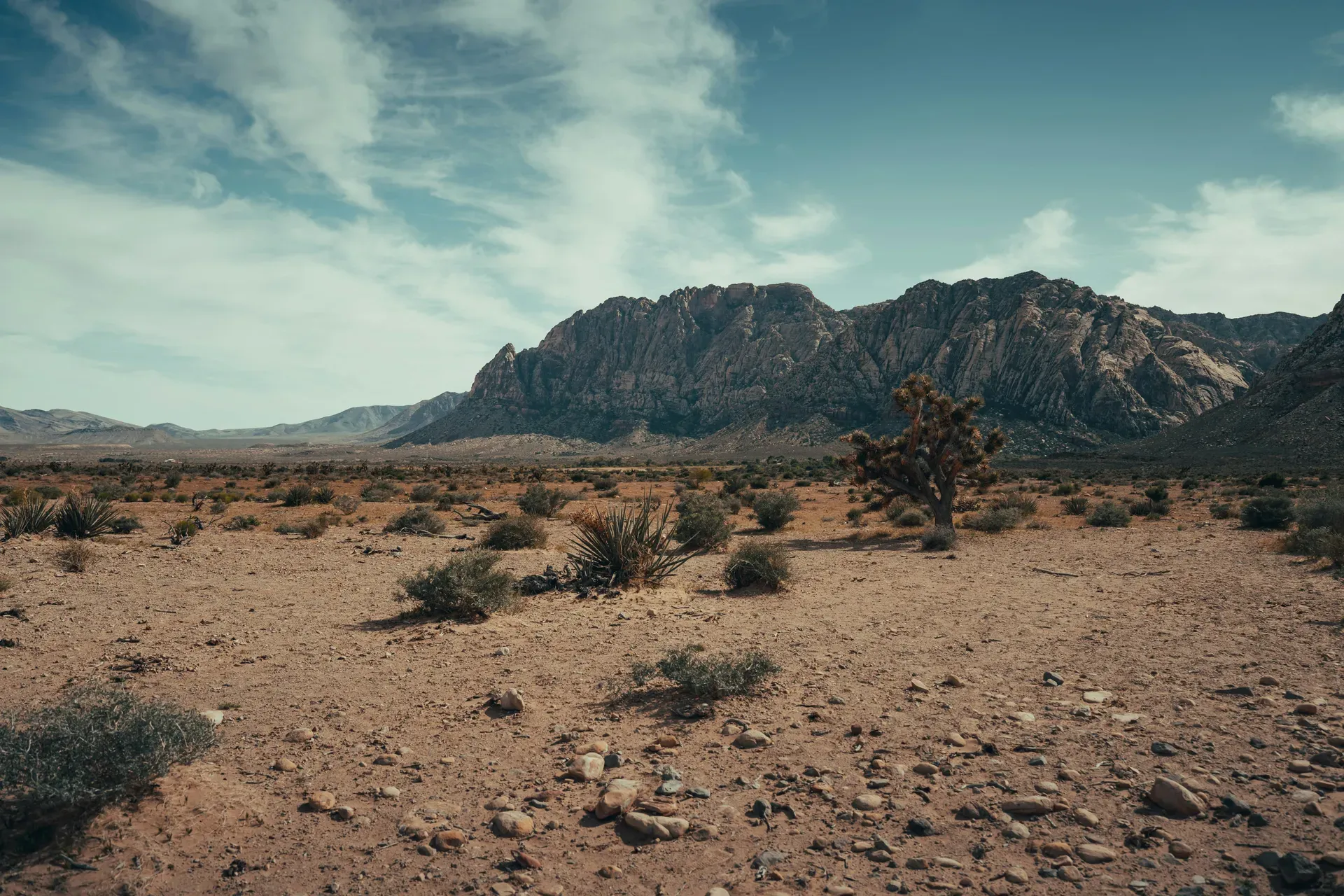
The Mojave Desert spans 54,000 square miles across southeastern California, southern Nevada, Arizona, and Utah. This arid basin and range landscape holds North America's lowest elevation point alongside 650-foot sand dunes and ancient volcanic fields.
The Mojave Desert covers 54,000 square miles of southeastern California, extending into southern Nevada, Arizona, and Utah. Parallel mountain ranges, dry valleys, and salt flats define this basin and range topography. Most of the terrain sits between 2,000 and 4,000 feet above sea level, earning it the classification of a high desert. Death Valley drops to 282 feet below sea level, marking the lowest elevation in North America. Just an hour away, Ash Meadows Wildlife Refuge sustains 26 endemic species in a desert oasis fed by turquoise springs.
A massive rain shadow created by the southern Sierra Nevada and Transverse Ranges blocks Pacific moisture from reaching the basin. Summer temperatures frequently exceed 110°F (43°C), creating dangerous conditions for anyone caught without adequate water. Winter nights routinely plunge below freezing, and infrequent snows occasionally make higher elevation roads impassable. Zero gas stations exist within the 1.6-million-acre Mojave National Preserve boundaries. Drivers must fill up in surrounding towns like Baker or Needles before crossing the park limits.
Visitors navigate unpaved roads and uneven gravel trails to access the interior. Cell phone service drops completely miles before you reach the main attractions. Paper maps and dedicated off-road GPS devices replace digital navigation apps here. You share the environment with venomous Mojave Green rattlesnakes and scorpions. Checking shoes before putting them on and avoiding blind rock crevices prevents emergency situations in an area where medical help remains hours away. Pack at least one gallon of water per person per day.
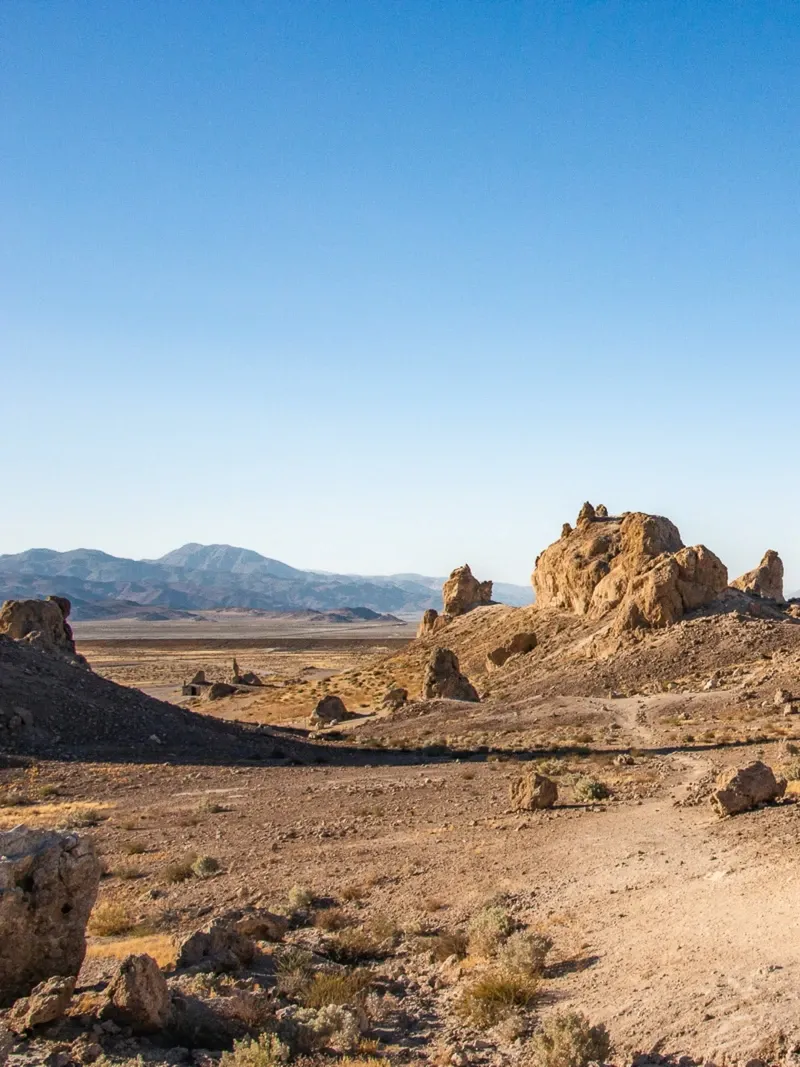
Paleo-Indians arrived in the region over 11,000 years ago. Tribes including the Chemehuevi, Shoshone, Southern Paiute, and Mojave later settled along the Colorado River basin. These groups utilized the sparse water sources and established extensive trade routes across the arid basin. The harsh climate required precise knowledge of seasonal springs and resilient plant life for survival.
Spanish explorer Juan de Oñate encountered the Mohave people in 1604 while searching for the Southern Sea. Spanish explorers officially named the desert after the tribe in the late 16th century. Father Francisco Garcés, a Franciscan missionary, lived with the Mojave Indians during the 1700s. He recorded the only written accounts of their traditional daily life and customs before widespread European settlement altered their society.
Gold miners, ranchers, and homesteaders flooded the region in the late 19th and early 20th centuries. They carved out the Mojave Road, a primary transit corridor for wagons moving goods and people across the rough terrain. The Kelso Depot opened to service steam locomotives pushing through the heat. Abandoned mine shafts still dot the landscape today. These deep, unstable pits pose a severe collapse risk and frequently contain toxic fumes. Hikers must stay on marked trails to avoid falling into these unmarked historical remnants.
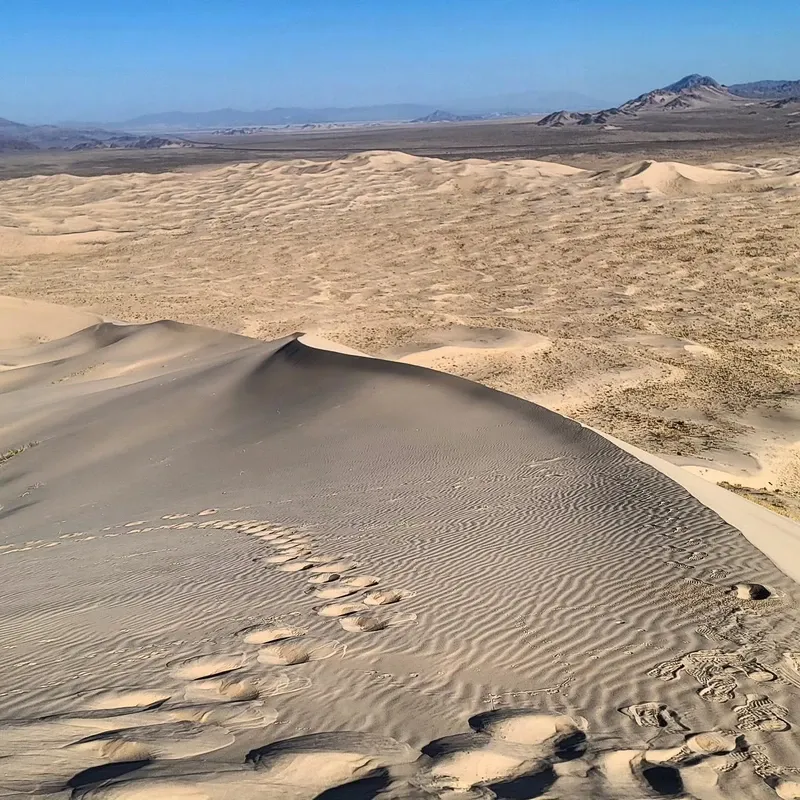
Carbonate-rich sedimentary rocks form layers up to 10 kilometers thick beneath the surface. Tectonic activity folded and faulted these ancient sea beds starting 250 million years ago. The oldest sedimentary deposits date back over a billion years. Kelso Dunes rise 650 feet above the desert floor. Sliding sand cascades down these massive golden slopes, producing a distinct moaning sound caused by friction between the silica grains.
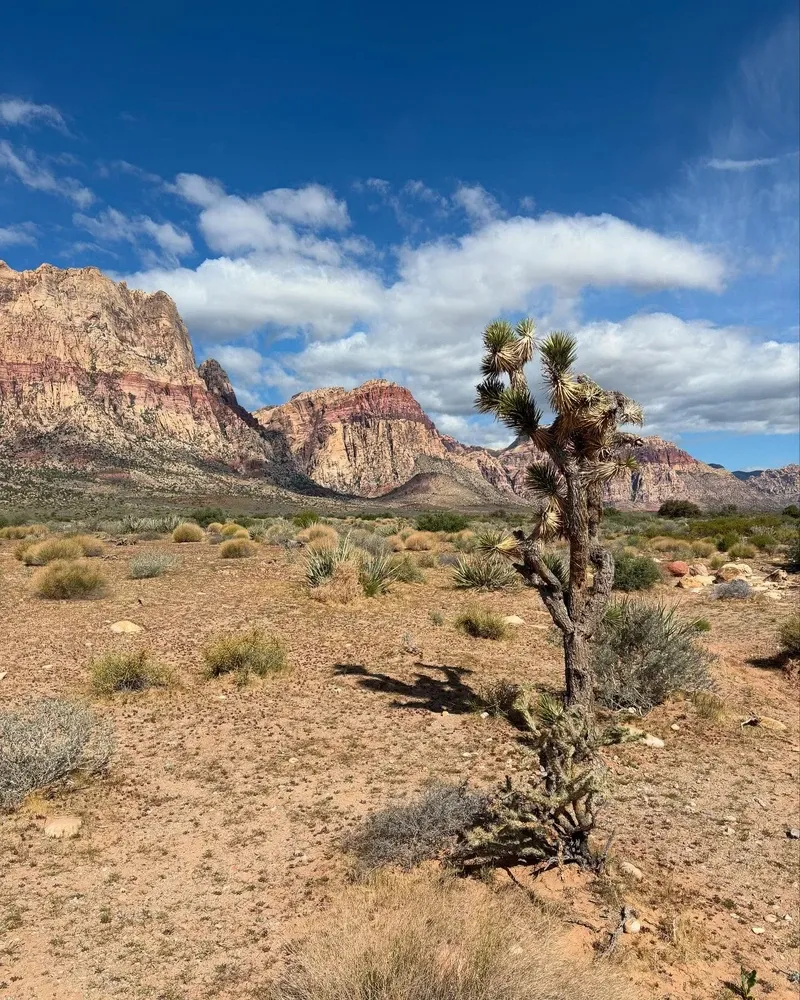
Volcanic activity shaped the Cinder Cones National Natural Landmark. The Mojave Desert Lava Tube allows hikers to descend into a dark, subterranean basalt cave. A single hole in the ceiling lets a concentrated beam of sunlight pierce the dusty air, illuminating the dark rock walls. Above ground, Teutonia Peak marks the highest point of the Cima volcanic field. The trail to the summit winds directly through ancient lava flows and dormant volcanic cones. Nearby, the Cima Forest contains a dense concentration of endemic Joshua trees, though the August 2020 Dome Fire burned a significant portion of this landscape.
Wind erosion carved deep pockets into the towering rock walls of Banshee Canyon. The Hole-in-the-Wall Rings Loop Trail routes climbers up these vertical cliffs using a series of mounted metal rings. Deep underground in the Providence Mountains State Recreation Area, Mitchell Caverns contains extensive limestone stalactites and stalagmites. Accessing these remote geological sites requires driving on unmaintained dirt roads that frequently wash out after rare, heavy rainstorms. Check the National Park Service website for road closures before departing.
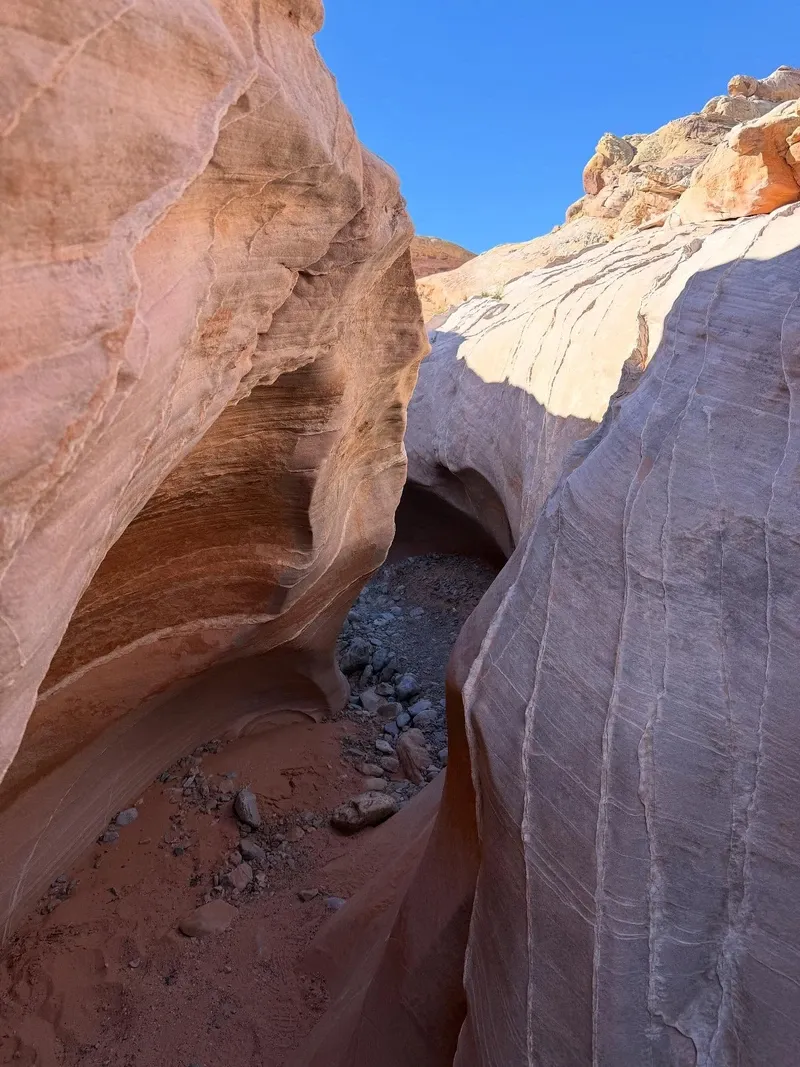
The Mojave Desert sustains a 10,000-year record of human adaptation to extreme environments. Indigenous populations relied on the Colorado River and scattered springs, weaving the landscape into their creation narratives and survival strategies. Modern conservation efforts focus heavily on protecting endemic species tied to this specific habitat, including the threatened desert tortoise and the iconic Joshua tree.
The U.S. Department of Defense utilizes the vast, unpopulated expanses for critical military training operations. Aerospace testing facilities operate in the western edges, taking advantage of the clear skies and flat dry lake beds. Hollywood frequently uses the stark basin and range topography as a backdrop for major motion pictures. The harsh sunlight, towering basalt cliffs, and golden dunes substitute for alien planets and post-apocalyptic wastelands on film.
Commercial filming requires a permit from the California Film Commission and a $91.00 application fee. Drones remain strictly prohibited across all land and airspace managed by the National Park Service. This ban protects local wildlife from noise stress and preserves the natural silence of the open desert plains. Permits are also required for group recreation involving more than 7 vehicles or 25 people.
Kelso Dunes produce a rare moaning sound when sand slides down the 650-foot slopes.
Sedimentary rock layers beneath the desert floor reach up to 10 kilometers in thickness.
Mitchell Caverns house complex limestone stalactites deep within the Providence Mountains.
Hikers use mounted metal rings to scale vertical rock walls in Banshee Canyon.
The August 2020 Dome Fire destroyed a massive section of the dense Joshua tree forest along Cima Road.
A hole in the Mojave Desert Lava Tube ceiling creates a concentrated beam of sunlight inside the dark basalt cave.
The region provides critical habitat for the threatened desert tortoise, which visitors are legally prohibited from touching.
No, there is currently no entrance fee to access Mojave National Preserve. Other nearby National Park Service sites may charge fees, and camping fees apply at developed sites like Hole-in-the-Wall.
No, UTVs, side-by-sides, and ATVs are strictly prohibited. All vehicles must be street-legal under California law, and out-of-state OHV stickers are not recognized.
No, drones and unmanned aircraft are banned in all land and airspace managed by the National Park Service. This rule protects wildlife and preserves natural silence.
Cell phone service is virtually non-existent throughout the 1.6-million-acre preserve. Visitors must carry physical maps or dedicated off-road GPS devices for navigation.
Zero gas stations exist within the preserve boundaries. Drivers must completely fill their tanks in surrounding towns like Baker, Fenner, or Needles before entering.
Collecting any wood, including downed branches, is strictly prohibited. Campfires are only permitted in established fire rings, and visitors must bring their own firewood.
Groups are limited to 7 vehicles and 25 people. Exceeding this limit requires a special park use permit applied for at least four weeks in advance.
The desert contains venomous species including the Mojave Green rattlesnake and scorpions. Visitors should avoid placing hands in blind rock crevices and check shoes before wearing them.
Back away slowly while maintaining eye contact and do not run. Approaching, feeding, or disturbing wildlife violates federal law and endangers both the animal and the visitor.
The Kelso Depot Visitor Center is currently closed for extensive renovations. The Headquarters Information Center in Barstow operates Monday through Friday from 8:00 am to 4:30 pm.
Browse verified tours with free cancellation and instant confirmation.
Find Tours